
Author: Site Editor Publish Time: 2026-09-17 Origin: Site

Picture this. You are sitting in your living room on a bitter January evening. The thermostat is cranked up, yet a persistent, invisible chill creeps across the floor. This is a common frustration for countless homeowners dealing with skyrocketing energy bills, even with modern HVAC systems installed. Building science tells us that up to 30 percent of a home’s heating and cooling energy is lost through poorly sealed building envelopes.
Thick, multi-pane glass usually gets all the attention in energy discussions. However, the actual mechanical mechanism that seals the sash to the frame is just as critical to your home's thermal performance. As a facade engineer, I constantly see high-end glass underperforming simply because the frame leaks air.
The premium solution for modern residential and commercial builds lies in the structural design of swinging window profiles. Their unique operating mechanism offers a massive structural advantage over traditional sliding variants. The core concept here is compression sealing. Sliding windows inherently rely on friction and require operational gaps to move. In stark contrast, aluminum casement windows press a sash tightly against a stationary frame. This creates a vault-like, continuous perimeter seal.
This guide breaks down exactly how this sealing technology works and the physics of draft prevention. We will explore why specific metallic hardware components matter and how to evaluate the best configurations for maximum energy efficiency, acoustic insulation, and long-term indoor comfort.
Vault-Like Airtightness: The mechanism physically squeezes a flexible polymer gasket between the moving sash and the rigid frame. This eliminates the microscopic gaps responsible for winter drafts.
Hardware is the Engine: Multi-point locking systems ensure even pressure across the entire perimeter. This prevents metal warping and stops localized air leaks instantly.
Superior to Sliders: Swinging designs do not require tracks to glide on. This gives them significantly higher water resistance and structural integrity.
Direction Matters: Outward and inward-swinging designs interact with wind pressure differently. Engineered correctly, both utilize environmental pressure to actively enhance the weather barrier.
Energy and Acoustic Benefits: A flawless seal stops thermal bypass. It also drastically reduces outside noise transmission, keeping your living space quiet and dry.
To truly grasp why certain fixtures outperform others in stringent energy audits, we need to look at their mechanical operation. A casement window is hinged on one side and swings open, functioning much like a heavy front door. Compression sealing is the physical act of the sash being pulled aggressively against specialized weatherstripping on the stationary frame when you lock the unit.
The architectural market primarily uses two distinct methods to keep the elements at bay. These are friction and compression.
Friction seals are the standard in sliding or double-hung configurations. By design, a sliding sash must leave a marginal structural gap within its track. This allows it to glide back and forth without binding. Weatherstripping, often consisting of fibrous brush or pile seals, is inserted to fill this void. The problem is that it relies purely on the friction between moving parts. Over time, this constant rubbing degrades the material. More importantly, that inherent gap always compromises the barrier. Subtle drafts will eventually bypass the seal.
Compression variants operate on a fundamentally different principle. Because the sash swings shut on a hinge, it does not need sliding track gaps. The locking mechanism physically crushes a resilient rubber or silicone gasket between two flat metal surfaces. This creates a continuous, impenetrable wall against the outside climate.
Feature | Friction Sealing (Sliding Windows) | Compression Sealing (Casement Windows) |
|---|---|---|
Operating Mechanism | Glides on tracks with necessary operational gaps | Swings on hinges, locking tight against the frame |
Seal Material | Brush, pile, or thin vinyl fins | Thick EPDM, Silicone, or TPE rubber gaskets |
Wear and Tear | High wear due to constant rubbing and friction | Low wear; gasket is simply compressed and released |
Airtightness Level | Moderate; susceptible to micro-drafts | Exceptional; vault-like hermetic seal |
The long-term effectiveness of any gasket relies heavily on the rigid stability of the surrounding frame. Wood acts like a sponge and swells with spring rains. Standard vinyl can bow under the intense heat of the summer sun. Architectural-grade aluminum, however, boasts exceptional dimensional stability.
Extruded metal remains perfectly square and rigid over decades of daily use. Because of this, the gasket aligns flawlessly every single time you turn the handle. If a frame were to warp even a fraction of an inch, the rubber would experience uneven pressure. That inevitably leads to localized leaks. High-quality aluminum prevents this structural degradation entirely.
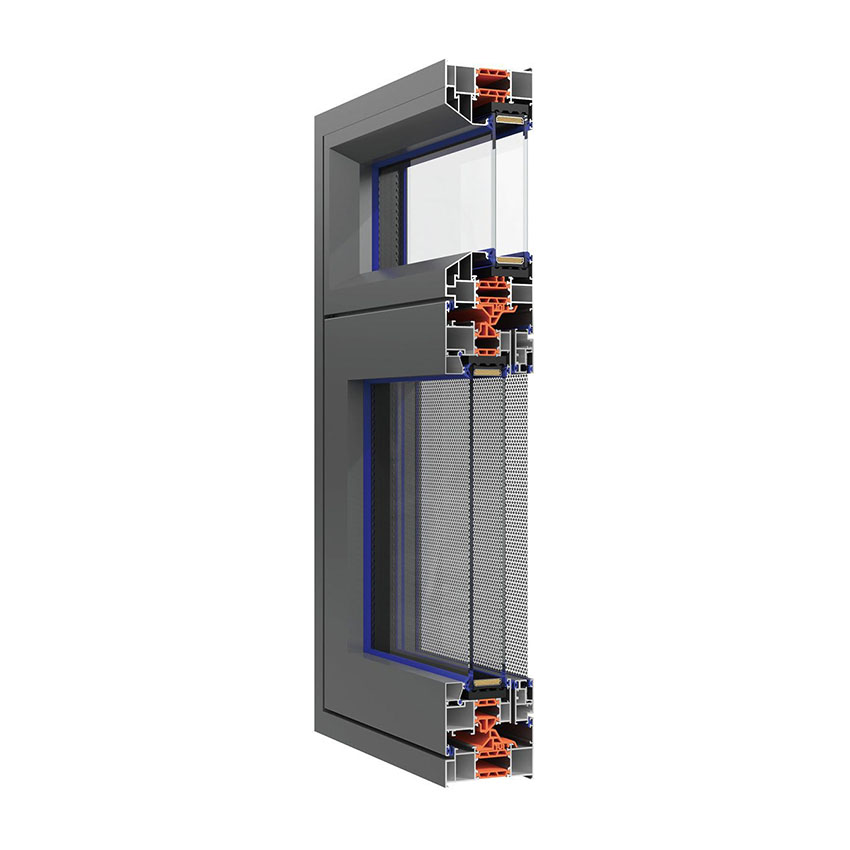
Moving beyond basic mechanics, the true magic of these fixtures lies in fluid dynamics and pressure management. Airtightness is a precise science of controlling the pressure differentials between the interior and exterior of a building envelope.
Recent fenestration market analyses reveal a profound shift in how building envelopes are designed today. Driven by increasingly stringent energy codes and the global rise of Passive House standards, industry experts note that traditional friction-based seals are rapidly becoming obsolete in high-performance construction. Modern building science demands climate resilience. Consequently, advanced compression sealing is no longer viewed as a premium luxury upgrade. It is now widely recognized by engineers and architects as a baseline necessity for mitigating the effects of severe weather events and achieving net-zero energy goals.
Air and water molecules are remarkably persistent. They will penetrate structural voids as small as a fraction of a millimeter. When a winter gale blows against a building, it creates positive pressure on the exterior. This forces cold air to seek the path of least resistance into your lower-pressure, heated interior.
The squeeze of the gasket is explicitly designed to counteract this atmospheric pressure. As the locks engage, the flexible polymer conforms to the microscopic imperfections and surface variations of the metal frame. This physical deformation fills all potential void spaces. It effectively neutralizes the path of least resistance and blocks infiltration at a molecular level.
To visualize this scientific principle in everyday terms, think about your kitchen. When you push a modern refrigerator shut, you can physically feel the magnetic gasket engage. It pulls the heavy door tight and seals it completely. Once that latch catches, the continuous perimeter barrier blocks all air exchange between the freezing interior and your warm house.
High-performance windows replicate this exact environmental isolation. The metallic hardware acts as the latch. The continuous weatherstripping acts as the refrigerator seal, ensuring your indoor climate remains completely separated from external weather extremes.
A premium rubber gasket is virtually useless if the surrounding metal components fail to engage it properly. In high-end fenestration, the mechanical hardware system is the engine driving the seal's performance.
A standard flaw in older, budget-friendly windows is the reliance on a single latch located in the center of the sash. This secures the middle, but it often leaves the top and bottom corners slightly loose. That uneven clamping force creates vulnerable points for air to infiltrate during high winds.
Modern architectural profiles utilize multi-point locking systems. When you turn a single handle, internal steel tie-rods simultaneously engage mushroom cams and strike plates at the top, middle, and bottom of the frame. This brilliant engineering distributes the locking pressure evenly across the entire vertical length of the gasket. Securing the sash at three or more distinct points prevents bowing and ensures uniform airtightness from corner to corner.
The locking system is only the final step. The initial squeeze is generated by the operating hardware. Heavy-duty scissor hinges and precision-engineered crank mechanisms work in tandem to manage the heavy weight of triple-pane glass.
As the handle is turned to close the unit, the operator arm pulls the heavy sash tightly inward. The geometry of high-quality hinges guides the sash perfectly parallel to the frame in the final fraction of an inch. This ensures the rubber is compressed straight on, rather than being pinched at a harsh angle. Proper alignment maximizes the lifespan and effectiveness of the barrier before the locks are even engaged.
The physical composition of the weatherstripping is your frontline defense against the elements. Not all synthetic rubbers are created equal. Material science dictates their long-term viability in extreme climates.
When engineering or investing in insulated double casement windows, you will typically encounter three advanced polymers. Each serves a specific purpose.
EPDM, or Ethylene Propylene Diene Monomer, is widely used in the aerospace and automotive industries. It is a highly durable synthetic rubber celebrated for its incredible memory. It has the ability to bounce back to its original, uncrushed shape after being locked tight for months at a time. It also exhibits exceptional resistance to ozone and ultraviolet radiation.
Silicone compounds offer superior performance in sub-zero freezing climates. Standard plastics turn brittle and crack in the cold. Silicone, however, remains highly flexible, maintaining its draft-stopping properties through the harshest winters.
Thermoplastic Elastomer, known as TPE, is often found in co-extruded profiles. It balances the elasticity of rubber with the manufacturing ease of plastic. TPE can be cleanly welded at the corners for a seamless, continuous perimeter.
Premium designs do not rely on a single line of defense. Instead, they utilize a multi-layered approach. This typically features a primary exterior seal, a secondary center seal, and a tertiary interior seal. This setup creates internal decompression chambers between the sash and the frame. If a driving rainstorm breaches the first exterior gasket, the wind loses its kinetic energy inside the chamber. The water is then safely drained away before it can ever reach the secondary interior barrier.
The direction in which the sash swings fundamentally alters how it interacts with environmental forces, particularly heavy wind loads.
Outward-swinging configurations are incredibly popular in coastal regions prone to heavy storms. The physics behind their performance is naturally advantageous. When a strong gale blows against the exterior of a home, it exerts immense positive pressure directly onto the glass. Because the sash opens outward, this external wind actually pushes the unit tighter against the frame's gasket. Mother Nature essentially assists the hardware, naturally reinforcing the barrier during severe weather events.
European-style profiles, such as inward opening casement windows, swing directly into the living space. A common misconception is that external wind will push these units open and break the hermetic seal.
Modern engineering has completely mitigated this concern. High-quality inward-swinging designs, like the robust 90 series aluminum profiles, utilize highly specialized, deep overlapping frames. The exterior aluminum frame is designed to physically overlap the sash, creating a rigid barrier. Combined with heavy-duty steel multi-point locks that anchor the sash deep into the frame, the gasket remains completely compressed. The structural overlap ensures that even when negative wind suction attempts to pull against the building, the internal locks hold the weatherstripping firm. This offers elite performance that rivals outward-opening counterparts.
Stopping a cold winter draft is the most immediate and noticeable benefit. However, achieving a near-perfect hermetic seal unlocks several secondary advantages that dramatically improve your daily living environment.
Airtightness directly prevents convective heat loss. This is the transfer of heat through the physical movement of air. When a window leaks, your HVAC system must work continuously to replace the lost conditioned air. By cutting off this air exchange entirely, convective heat bypass is eliminated. When paired with thermally broken metal frames and argon-filled Low-E glass, these fixtures maintain stable indoor temperatures year-round. This significantly lowers monthly utility bills.
Sound waves travel primarily through the air. If a window has a tiny gap, sound will easily find its way into your bedroom. If air cannot get through, neither can the sound of a neighbor's lawnmower or heavy street traffic. By completely cutting off air pathways, these advanced seals drastically reduce noise pollution. They create a peaceful, quiet sanctuary inside your home.
A tight barrier provides significant health and structural maintenance benefits. By blocking air exchange, the gasket keeps outdoor allergens, industrial dust, and spring pollen from entering the living space. This vastly improves indoor air quality. Furthermore, it prevents moisture-laden, humid air from infiltrating the building envelope. Proactive moisture management stops condensation accumulation, preventing hidden mold and mildew growth inside your wall cavities.
For homeowners and builders actively researching high-quality fenestration replacements, navigating the technical specifications can be daunting. Knowing exactly what metrics and physical attributes to look for will ensure a sound, long-lasting investment.
The most objective measure of performance is the Air Leakage rating, certified by independent organizations like the National Fenestration Rating Council. This rating measures how many cubic feet of air pass through a window per minute, per square foot of frame area. Industry standards generally require a rating of 0.30 or lower. Due to the extreme efficiency of modern compression technology, premium swinging windows often score much lower. They frequently hit 0.05 or even 0.01 cfm/sq ft, indicating elite, vault-like protection.
Beyond paper specifications, physical tactile inspection is crucial. When testing a display model, pay close attention to the feedback of the hardware. As you turn the locking handle, you should feel a distinct, satisfying, and smooth resistance. That torque is the physical squeeze of the multi-point locks engaging the rubber.
Always inspect the corners of the frame. The highest quality products feature continuous, un-spliced gaskets that wrap cleanly around the corners, or vulcanized welded corners. Avoid products with cheap rubber strips that are simply butt-jointed together at a 90-degree angle. Those are the most common failure points for future leaks.
While insulated glass and structural frame materials often dominate the conversation, the compression seal is the unsung hero of true window performance. It is the definitive mechanical feature that elevates swinging designs above traditional sliders, offering unparalleled protection against the elements.
Investing in high-quality architectural profiles equipped with multi-point locks and advanced polymer gaskets is an investment in long-term comfort, significantly lower energy bills, and a quieter home. By understanding the science behind the seal, you can make an informed decision that will protect your home's envelope for decades. If you are ready to upgrade your building's performance, explore our premium catalog of highly sealed, climate-resilient fixtures at Rodeo to find the perfect engineered solution for your project.
Yes. Sliding windows rely on friction-based weatherstripping and require a slight track gap to operate. This inherently allows some air to escape. Swinging designs use a mechanical mechanism that physically crushes a flexible rubber gasket between two flat surfaces, creating a nearly 100 percent airtight barrier.
High-quality gaskets made from commercial-grade EPDM or silicone can easily last 15 to 20 years or more. Because rigid metal frames do not warp, swell, or expand significantly with seasonal temperature changes, the rubber undergoes far less mechanical stress. It maintains its original shape much longer than it would in a vinyl or wood frame.
Yes, provided they are engineered correctly. Outward-opening designs naturally benefit from external wind pushing them shut. However, modern inward-swinging profiles use advanced multi-point locking systems and deep, overlapping frame designs to mechanically anchor the sash. This guarantees exceptional water resistance and draft protection against the elements.
If you feel a draft, the compression seal may be failing or the hardware might be out of alignment. Common culprits include a worn-out rubber gasket that has lost its memory, a warped sash, or hinges that have sagged over time, preventing the multi-point locks from pulling the window tightly against the weatherstripping.
Yes. Condensation occurs when warm, moist indoor air meets a cold surface. By creating an airtight barrier, compression seals prevent cold outdoor drafts from chilling the interior frame edge. It also stops warm indoor air from leaking into the window cavity, significantly reducing the chances of condensation and subsequent mold growth.
Yes. If the rubber loses its elasticity, becomes brittle, or gets damaged over time, it can usually be pulled out of its retaining extrusion grooves and replaced with fresh weatherstripping. This simple, cost-effective maintenance restores the original performance without needing to replace the entire metal frame or expensive glass unit.


