
Author: Site Editor Publish Time: 2026-06-28 Origin: Site

Front windows serve as the most vulnerable physical breach points in any building facade. Intruders often target them first. Standard alarm sensors typically activate only after someone shatters the glass. This reactive approach leaves your property completely exposed. We must shift toward proactive physical deterrence. You need reliable systems stopping breaches before glass breaks entirely.
This article provides a clear, evidence-based evaluation of integrating an aluminum shutter door into your architecture. We will explore how these robust barriers upgrade front-line defense. You will learn how they balance structural integrity and modern aesthetic appeal. Physical barriers force intruders to rethink their attack. Metal shutters actively delay forced entry attempts. You no longer have to sacrifice curb appeal for serious safety. Let us examine the mechanics of modern facade protection.
Proactive Deterrence: Aluminum shutters physically delay or prevent forced entry, serving as the primary barrier before glass is compromised.
Structural Integrity: Extruded aluminum profiles offer superior impact resistance compared to standard glass films or interior blinds.
Layered Security: They operate best as the foundational physical layer within a broader security shutter system, complementing alarms and cameras.
Zero Aesthetic Compromise: Modern systems utilize concealed housings and custom powder coatings to maintain curb appeal without sacrificing safety.
Understanding material science reveals why metal barriers stop intruders. A massive difference exists between extruded aluminum and standard roll-formed aluminum. Manufacturers create roll-formed slats by bending thin metal sheets. They often inject foam inside these slats to maintain shape. Roll-formed options handle light impacts but fail against determined brute force.
Extruded aluminum changes the entire equation. Manufacturers force hot metal through a die to create solid, heavy-duty profiles. These thick profiles actively resist pry-bar attacks. They absorb blunt force without buckling. When you evaluate physical security, extruded material stands out as the superior choice.
Security relies on more than just strong slats. Track and lock integration plays a massive role in defense. We can outline the structural mechanics in three core areas:
Deep-Channel Guide Rails: Shutters travel down vertical tracks. Deep channels prevent intruders from pushing the curtain out of its frame.
Bottom Bar Locking: The lowest slat anchors into the sill. This creates a rigid barrier defying upward lifting forces.
Interlocking Hinges: Each metal slat locks into the next. This continuous hinge design eliminates weak points across the window span.
Visual deterrence offers a powerful psychological barrier. Intruders strongly favor speed and silence. A deployed metal barrier signals a high-effort target. Bypassing it requires power tools, excessive time, and massive noise. Criminals recognize this immediately. The mere presence of a heavy-duty shutter actively reduces attempt rates. They usually move on to an easier target.
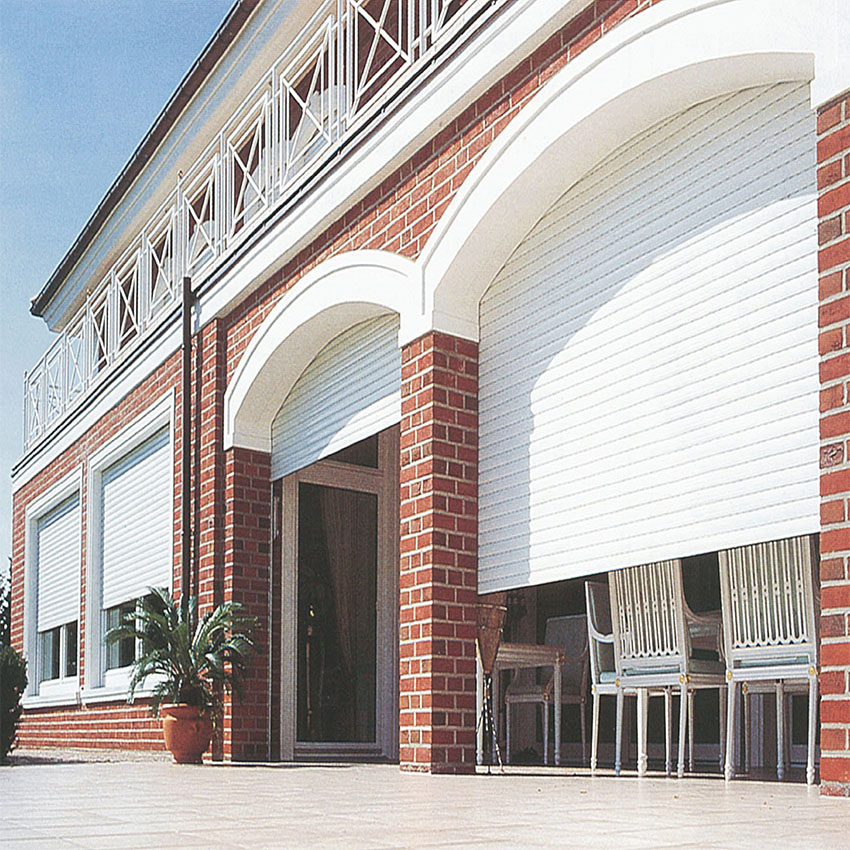
Property owners frequently face a difficult "looks versus security" dilemma. Many buyers hesitate to install physical barriers. They fear a modern roller shutter door might look overly industrial. They worry about creating an unwelcoming, fortress-like exterior. Historically, this concern held merit. Older designs prioritized function over form entirely.
Modern engineering eliminates this aesthetic compromise. Concealed housing options revolutionize exterior installations. Today's "mini" roll-up designs utilize remarkably compact housing boxes. Installers can tuck these boxes tightly under existing eaves. Customized fascia panels allow the hardware to blend seamlessly into your existing exterior architecture. When rolled up, the defense system essentially disappears.
Color matching further preserves your property's curb appeal. You are no longer restricted to raw metal finishes. Manufacturers offer extensive architectural powder coatings. You can match your existing window frames perfectly. You can replicate the exact trim color of your facade.
This customization satisfies strict Homeowner Association (HOA) requirements easily. Preserving aesthetics maintains property value. You secure your front windows visually and physically. Visitors notice your beautiful home exterior. Intruders notice the impenetrable metal shield guarding it.
Physical barriers offer impressive benefits extending far beyond crime prevention. Environmental protection remains a crucial secondary function. Severe weather events turn ordinary yard objects into dangerous projectiles. Wind-borne debris shatters fragile front window glass instantly. Aluminum systems mitigate these storm hazards perfectly.
When storms approach, deploying your shutters creates an instant impact shield. The heavy-duty extruded slats deflect branches, hail, and debris. Your expensive window glass remains completely untouched behind the metal curtain.
Moisture and draft sealing represent another massive advantage. High-quality installations incorporate specific weatherproofing elements. Consider the following environmental defenses:
Bottom-Bar Weatherstripping: A heavy rubber gasket seals the gap against the window sill.
Track Seals: Felt or vinyl inserts line the vertical guide rails, preventing draft penetration.
Water Ingress Reduction: A well-fitted waterproof shutter blocks driving rain from pooling against vulnerable window frames.
We must clarify realistic expectations regarding moisture. These systems do not create a submarine-level, airtight seal. However, they significantly reduce water damage risks during severe storms.
Thermal efficiency provides a final environmental benefit. Deployed shutters create an insulating air pocket. This dead air space sits between the cold glass and the metal barrier. It heavily reduces thermal transfer. Your HVAC system works less rigorously during extreme temperature swings. This physical buffer stabilizes indoor temperatures beautifully.
We must establish realistic expectations regarding property safety. No single device makes a building completely invincible. Trustworthy security relies on overlapping measures. You should view a modern security shutter system as the foundational physical layer. It complements your alarms, cameras, and motion lights.
Security professionals utilize the "Delay Matrix" concept. This framework evaluates how much time and noise a barrier demands. Shutters act as the ultimate delay mechanism. They force intruders to spend critical minutes attempting entry. They force intruders to create neighborhood-waking noise. We can visualize this matrix below.
Defense Layer | Primary Function | Time Delay Imposed | Noise Level Generated |
|---|---|---|---|
Standard Glass Window | Environmental Barrier | 1 - 3 Seconds | Brief Shatter |
Window Security Film | Shatter Resistance | 10 - 30 Seconds | Repeated Banging |
Electronic Alarm Sensor | Reactive Alert | 0 Seconds (Post-Breach) | High Siren |
Extruded Aluminum Shutter | Proactive Physical Denial | 5 - 15+ Minutes | Sustained Metal Grinding |
Technology synergies enhance this physical layer dramatically. Modern physical shutters interact flawlessly with existing smart tech. Motorized systems link directly to home automation hubs. You can program them to deploy automatically at sunset. You can wire them to drop the moment you arm your primary burglar alarm.
This integration removes human error. You never forget to lock the windows. The system secures the perimeter for you. You achieve true peace of mind through automated, layered defense.
Selecting the right barrier requires assessing your specific threat level. You must navigate various product categories. Your choice dictates the overall effectiveness of your facade protection.
First, evaluate material strength. Buyers often choose between foam-filled aluminum and extruded aluminum. Foam-filled profiles offer better insulation properties. They provide moderate security suitable for low-crime residential areas. Single-wall or double-wall extruded aluminum provides maximum security. Choose extruded profiles if physical intrusion represents a high-probability threat.
Deployment mechanisms require careful consideration. Manual crank systems remain highly budget-friendly. They operate entirely off the grid. They act as a fail-safe during power outages. Motorized systems enjoy a much higher adoption rate today. They offer incredible ease of use. However, motorized units require battery backup considerations for emergency operations.
Installation realities dictate your final hardware choices. You must decide between retrofit and built-in applications. We compare these realities below.
Installation Type | Visual Impact | Structural Security | Ideal Scenario |
|---|---|---|---|
Retrofit (Surface Mount) | Housing box sits visibly on the exterior wall. | High. Anchors directly into external structural framing. | Upgrading existing homes without altering masonry. |
Built-in (Window Reveal) | Housing box hides inside the architectural opening. | Maximum. Tracks embed neatly into the window frame itself. | New construction builds or major facade renovations. |
Guide the installation process carefully. Ensure contractors anchor the deep-channel guide tracks into solid structural framing. Anchoring them into superficial cosmetic trim compromises the entire defense system. Proper space requirements for the housing box must dictate your final design choices.
Protecting front windows requires moving far beyond fragile glass and reactive alarms. Intruders bypass standard sensors too easily. You must implement physical deterrence denying entry entirely. Aluminum shutters transform vulnerable glass into an impenetrable facade.
We advise buyers to prioritize extruded aluminum profiles for maximum impact resistance. Always insist on professional installation. Installers must ensure guide tracks anchor deeply into structural framing, not just cosmetic wood trim. Overlooking this detail ruins the structural integrity of the barrier.
Take proactive steps today. Schedule a professional site evaluation. Measure your front window clearances accurately. Review custom finish options matching your home aesthetic. Securing your perimeter physically guarantees ultimate peace of mind.
A: Modern systems operate quietly. Manufacturers use specialized nylon end-clips on the slats. They install felt-lined inserts inside the vertical guide tracks. These elements minimize metal-on-metal rattling significantly. Motorized operation will produce a low mechanical hum, but the screeching sounds of older industrial doors are entirely eliminated.
A: No. Safety compliance remains a strict industry standard. Motorized systems must feature manual overrides. These usually include interior hand cranks. Premium systems incorporate integrated battery backups. These features guarantee you can always open the barrier safely from the inside, even during a total grid power outage.
A: Film provides a different function. It holds broken glass fragments together. This delays entry briefly. However, it does not prevent the window from being destroyed entirely. Shutters protect the glass asset completely. Shutters also provide a massive visual deterrent. Film remains invisible, failing to discourage the initial attack.


